


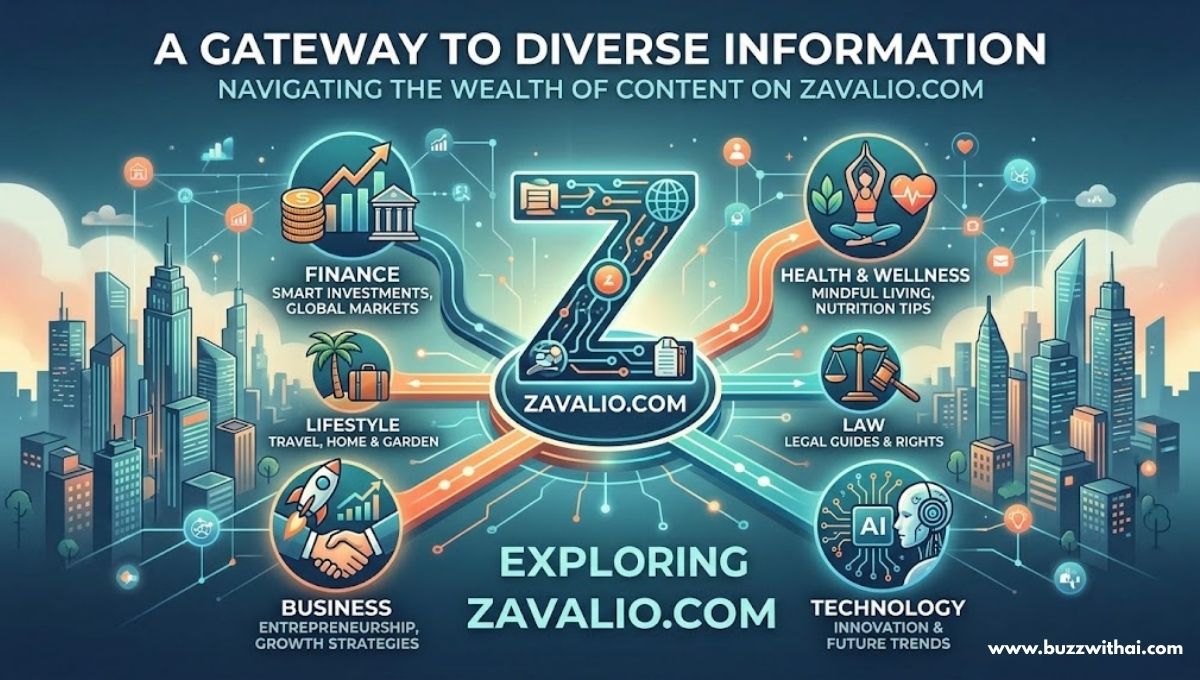
So you typed “zavalio com” into a search bar, and now you’re staring at a dozen articles that all say almost the same three things: clean layout, wide topic range, seems fine. That’s not exactly wrong. It’s just not the full story, and a few of those articles get details flat-out wrong.
This guide skips the recycled phrases and gets into what’s actually checkable about zavalio com what it is, what it isn’t, where the confusion around it started, and how to judge it yourself in five minutes instead of trusting a stranger’s blog post.
What Is Zavalio Com, Actually?
Let’s start with the boring, accurate answer. Zavalio com is a general-topic content and publishing site. It runs articles across a handful of categories business, finance, law, health, and lifestyle written in a plain, explainer style aimed at everyday readers rather than industry experts.
Here’s what it is not, despite what some reviews imply:
- It’s not an online store. There’s nothing to buy.
- It doesn’t collect payment information anywhere on the site.
- It doesn’t require an account or login to read articles.
- It doesn’t (as far as anything public confirms) run a creator payment or subscription system.
That last point matters more than it sounds like it should, because it’s the source of most of the confusion floating around this site’s name. More on that in a second.
For now, the simple version: zavalio com functions like a normal content blog. You land on an article, you read it, you leave. No paywall, no signup wall, no strings attached to the browsing itself.
Zavalio.com vs. Zaavio.com Don’t Mix These Up
This is the detail almost every other “zavalio com review” either buries in a footnote or skips entirely, and it’s probably the most useful thing you’ll get out of this whole article.
Zavalio.com and Zaavio.com are two completely different websites. One letter apart, two different purposes.
| Feature | Zavalio.com | Zaavio.com |
|---|---|---|
| Type of site | Content and publishing blog | E-commerce (online shopping) |
| What it sells | Nothing it’s article-based | Clothing, footwear, and consumer goods |
| Account required? | No, for reading | Yes, for purchasing |
| Common complaints | Minimal, mostly about content depth | Order issues, shipping delays, product quality, poor communication |
| Primary risk | Shallow coverage of complex topics | Financial risk tied to actual purchases |
If you went searching for complaints about “zavalio” and found a pile of unhappy customers talking about late orders or refund headaches, there’s a strong chance you found Zaavio’s reputation, not Zavalio’s. That’s not a defense of either site it’s just an important distinction before you judge one by the other’s baggage.
Names this close tend to blur together in search results, and a few review sites clearly haven’t caught the difference themselves. Worth remembering next time you see the two spelled almost identically in the same sentence.
Where the “Legit or Scam” Confusion Comes From
Here’s something worth understanding before you trust any single review of zavalio com, including this one: a lot of the content written about this site repeats the same handful of generic claims without adding anything specific or checkable.
You’ll see phrases like “runs on standard HTTPS,” “clean design,” and “no obvious malware” copied almost word-for-word across multiple articles. None of that is false, exactly. It’s just thin. Any website with a valid SSL certificate can claim the same three things, and that alone tells you almost nothing about who’s behind it or how trustworthy the content is.
A smaller number of articles go further and describe zavalio com as a “creator-first, venture-backed publishing platform” complete with a specific 5–10% commission structure and a named payment processor. Here’s the problem: none of that shows up anywhere on the actual site. No dashboard, no creator sign-up flow, no monetization terms page, nothing.
“Watch for review articles that describe features you can’t find anywhere on the actual site that’s usually the clearest sign an article was written without anyone actually checking.”
That’s good advice regardless of which site you’re researching. When a review makes a specific claim a commission rate, a partnership, a feature and you can’t find it documented anywhere on the platform itself, treat that claim as unverified until proven otherwise. It’s not automatically a lie. It might just be one writer’s assumption, copied by five other sites without anyone double-checking it.
Is Zavalio Com Safe to Visit?
Let’s split this into what’s actually verifiable and what isn’t, because lumping everything into one confident “yes, totally safe” answer isn’t honest.
What checks out:
- The site runs on standard HTTPS encryption, meaning your connection to it is encrypted in transit.
- No login or account creation is required just to read published articles.
- There’s no documented pattern of malware, forced downloads, or phishing forms tied to the domain.
- No aggressive pop-ups or fake “your device is infected” warnings the kind of thing that actually signals a dangerous site.
What’s genuinely unclear:
- Who owns the domain, and whether there’s a registered business behind it.
- The identity of the people writing the content (bylines tend to be first names or generic labels).
- Editorial standards whether anything published gets fact-checked before it goes live.
None of that second list is a red flag by itself. Plenty of small, legitimate blogs operate exactly this way, without a corporate structure or named editorial team standing behind them. But it does mean you’re reading content without knowing exactly who wrote it or why, which matters more on some topics than others.
A 5-Minute Safety Check You Can Run Yourself
Rather than taking any review’s word for it (including mine), here’s a quick, repeatable process you can run on zavalio com or any unfamiliar site in under five minutes:
- Look for the padlock. Check that the URL starts with
https://and your browser shows a secure connection indicator. - Run a WHOIS lookup. Free tools like whois.com will show you roughly how long the domain has existed. Sites active for years carry more track record than ones registered last month.
- Search “[site name] scam.” Read both the positive and negative results. If nothing but generic praise or generic warnings shows up with zero specifics, that’s a sign the search results themselves are thin, not necessarily that the site is bad.
- Check for a real About or Contact page. A physical address, a named team, or a business registration number adds credibility. Their absence isn’t proof of anything shady, but it does lower your confidence a notch.
- Trust your gut on the browsing experience. Constant pop-ups, redirect loops, or requests for personal information before you’ve even read anything are the actual warning signs far more telling than whether a site “looks professional.”
Run through that checklist on zavalio com yourself, and you’ll likely land in the same place most of the accurate reviews do: a low-risk, unremarkable content site, not a scam operation, but also not one with a deeply documented reputation behind it.
Is Zavalio Com Legit as a Publishing Platform? (The Two-Part Answer)
This is where a lot of reviews flatten a nuanced answer into a simple yes or no, and it does readers a disservice. The honest answer to “is zavalio com legit” splits into two parts depending on what you actually mean.
As an informational blog: yes. It’s a real, active site publishing genuine articles across multiple categories. There’s no evidence pointing to it being a scam, a phishing front, or a fake storefront.
As a “creator-first publishing platform” with monetization tools: no, not based on anything currently documented. That specific framing appears to have originated from one article and gotten copied across a cluster of others, rather than reflecting any actual feature on the site.
So if someone asks you directly: legit as a content site, overstated as a creator platform. Keep those two things separate in your head, because conflating them is exactly how the confusion spreads in the first place.
The “Creator Dashboard” Claim, Debunked
Let’s address this one head-on since it comes up so often. Several articles claim zavalio com offers:
- A creator dashboard for managing published content
- A 5–10% revenue-sharing or commission structure
- Integration with a named third-party payment processor
- Venture capital backing
None of this is documented anywhere on the actual site. No sign-up flow for creators, no terms-of-service language mentioning commissions, no payment integration visible anywhere in the browsing experience.
If you’re considering zavalio com specifically because you read about a monetization program, pump the brakes that claim doesn’t hold up under any direct check of the site itself.
This is a good general rule for evaluating any platform, honestly: if a specific financial claim (a commission rate, a funding round, a partnership) can’t be found on the company’s own site or in a credible, sourced report, don’t build a decision around it.
Content Quality What You’ll Actually Find
Assuming you’re just there to read, what’s the content itself actually like? Fair, general-audience explainer writing the kind you’d find on hundreds of similar blogs covering business, health, law, and lifestyle topics for a broad readership.
A few honest observations:
- Tone: Casual and accessible, written for people without background knowledge in the topic.
- Depth: Introductory. Good for a quick overview, not for anything requiring nuance or citation-level rigor.
- Author transparency: Limited. Bylines tend to be first names or generic labels rather than full names with credentials or professional backgrounds attached.
- Sourcing: Articles read as general knowledge summaries rather than pieces built on cited studies, interviews, or primary sources.
None of that makes the content bad or dishonest it’s simply typical of a mid-tier content blog, not a specialist publication. Treat it the way you’d treat any similar general-interest site: useful for a quick primer, not a place to end your research.
Should You Trust the Health, Legal, or Financial Articles?
Short answer: use them as a starting point, never a final answer.
If you read something about a health symptom, a legal process, or a financial decision on zavalio com, treat it exactly the way you’d treat a similar general blog with unnamed authors and no visible citations. It might point you in a reasonable direction.
It should not replace an actual doctor, a licensed attorney, or a certified financial advisor for anything with real consequences attached.
This isn’t a knock specific to zavalio com it’s the standard you should apply to the vast majority of general-content sites on the internet, especially ones without named, credentialed authors backing up what’s published.
Who Should Use Zavalio Com and Who Shouldn’t
Not every site fits every reader, and zavalio com is no exception. Here’s a straightforward breakdown:
Good fit for:
- Casual readers looking for a quick, plain-language overview of a general topic
- People who don’t want to create an account just to read an article
- Anyone comparing multiple general sources before digging deeper elsewhere
Not a good fit for:
- Writers looking for a publishing home base with real audience-building or analytics tools
- Anyone expecting a documented monetization or creator payment system
- Researchers or professionals who need cited, expert-level sourcing
If you fall into that second list, you’re better off looking at platforms that explicitly document their creator tools and monetization terms the mismatch between expectation and reality is exactly what causes the most frustration with sites like this.
Zavalio.com at a Glance
Here’s a single-table summary of everything covered above, useful if you just want the highlights without scrolling back up.
| Category | Verdict |
|---|---|
| Site type | General content/publishing blog |
| Account required to read? | No |
| Payment or e-commerce function? | None |
| HTTPS security | Yes, standard encryption present |
| Documented malware or phishing history | None found |
| Creator dashboard or monetization tools | Not documented anywhere on the site |
| Author transparency | Limited first-name or generic bylines |
| Content depth | General-audience explainers, not expert-level |
| Confusable with | Zaavio.com (unrelated e-commerce site) |
| Overall risk for casual browsing | Low |
Frequently Asked Questions
Is Zavalio Com a Scam?
No solid evidence points to fraudulent activity no pattern of stolen payment information, no fake storefront, no phishing complaints tied to the domain. At the same time, there’s no confirmed business registration or public ownership record either. The most accurate answer sits in the middle: unconfirmed either way, rather than a flat yes or no.
What Is Zavalio Com Used For?
Reading general-topic articles covering business, finance, law, health, and lifestyle. That’s the extent of its documented function as of now nothing more elaborate.
Is Zavalio.com the Same as Zaavio.com?
No, and this is worth repeating since it’s the most common source of confusion. Zavalio.com publishes articles. Zaavio.com sells physical products. Complaints about one shouldn’t be pinned on the other.
Does Zavalio Com Have a Creator Program or Monetization Tools?
No confirmed system exists as of this writing, despite claims circulating in a handful of review articles. If you’re specifically interested in publishing for income, this isn’t a documented feature here.
Is My Personal Data Safe If I Visit Zavalio Com?
For casual browsing, risk appears low. No login or personal information is required to read published articles, and there’s no documented pattern of aggressive data collection tied to the site.
Should I Trust the Health or Legal Content on Zavalio Com?
Treat it as a starting point, not a final answer the same standard worth applying to any general-audience blog without named, credentialed authors or cited sources behind the writing.
The Bottom Line
Strip away the recycled phrases and the inflated “creator platform” claims, and what’s left is fairly unremarkable: zavalio com is a general-topic content blog, technically safe to browse, thin on author transparency, and completely separate from the e-commerce site with the similar name that occasionally gets confused for it.
