
Albato
AI-powered embedded iPaaS for SaaS companies
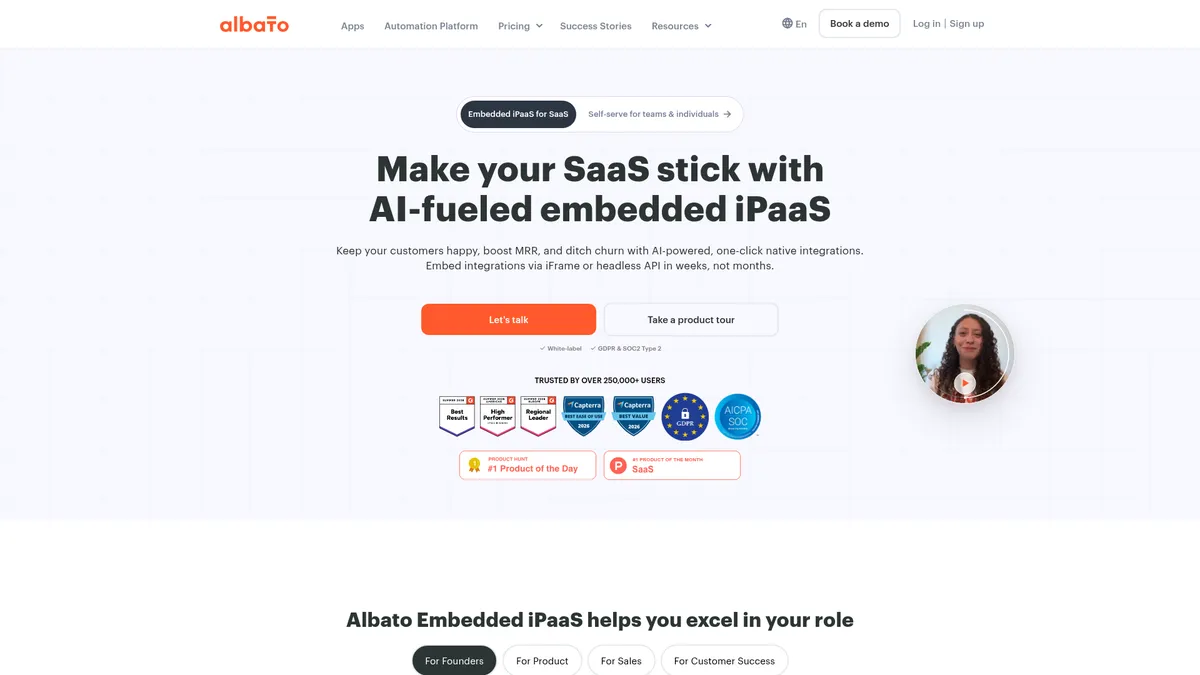
What is Albato?
How to Use Albato
Getting started with Albato is straightforward. Follow these steps to embed native integrations into your SaaS product and start automating workflows for your customers in minutes, not months.
Create Your Albato Account
Sign up for a free Albato account and verify your email. Choose your plan based on your transaction needs—start with the free tier to test the platform, then upgrade as your usage grows.
Select Target Integrations
Browse Albato's library of 1,000+ apps and select the integrations your customers need most. You can filter by category, search for specific apps, or use the AI-powered recommendations to find the most popular connectors for your industry.
Configure Integration Workflows
Use Albato's visual builder to set up triggers and actions for each integration. The AI-powered suggestions can help you configure workflows faster by recommending common automation patterns based on your selected apps.
Customize the White-Label Experience
Apply your brand colors, logo, and custom domain to the integration interface. This ensures the integration feels like a native part of your product and provides a consistent user experience across your platform.
Embed and Monitor Integrations
Deploy the integration interface via iFrame for quick embedding or use the headless API for deeper customization. Test thoroughly with sample data, monitor usage through Albato's analytics dashboard, and scale as your customer base grows.
Albato Core Features
Albato Use Cases
- 1Expand market share by offering native integrations that make your SaaS product more attractive to prospects and reduce churn by meeting their connectivity needs out of the box.
- 2Drive revenue growth by meeting enterprise demands for seamless integrations, unlocking higher-value contracts and differentiating your product in competitive procurement processes.
- 3Boost customer LTV and retention by making your product indispensable through deep integrations with the tools your users already rely on daily.
- 4Accelerate time to market with pre-built embedded integrations, eliminating months of in-house development and ongoing maintenance work.
- 5Gain full transparency into integration usage with detailed analytics and insights, helping you prioritize which integrations to build next based on real customer demand.
Pros and Cons of Albato
Pros
- White-label integrations allow you to maintain brand consistency while offering powerful connectivity, making the integration experience feel like a native part of your product.
- AI-powered automation reduces manual setup time and helps users discover relevant integrations faster, improving onboarding and time-to-value.
- Faster time to market with pre-built connectors and embeddable components, saving months of development effort compared to building integrations in-house.
- Cost-effective pricing scales with your needs, with a free tier for testing and paid plans starting at $15/month, making it accessible for startups and mid-market companies alike.
✕ Cons
- Limited company information is available publicly, making it harder to assess long-term stability and the team behind the platform.
- Some advanced features like AI Agents are marked as 'coming soon,' meaning they aren't fully available yet and the roadmap is still in progress.
- Additional transactions beyond plan limits are priced 50% higher than included ones, which can add up quickly for high-volume users or fast-growing SaaS products.
Albato vs Top Alternatives
| Feature | Zapier | Make | Tray.io | Celigo |
|---|---|---|---|---|
| White-label | Not available (standalone platform) | Not available | Available (embedded iPaaS) | Available (embedded iPaaS) |
| AI-powered | Basic AI features | Limited AI features | Advanced AI capabilities | Basic AI features |
| Starting Price | $19.99/mo | $9/mo | Custom pricing (enterprise) | Custom pricing (mid-market) |
| Number of Apps | 5,000+ apps | 1,500+ apps | 500+ apps | 200+ apps |
Albato Pricing
Free
- 100 transactions per month
- Basic integrations
- Community support
Pro
- 1K transactions per month
- AI-powered integrations
- White-label branding
- Priority support
Teams (Coming Soon)
- 5K+ transactions per month
- Advanced integrations
- Team collaboration
- Dedicated support
Custom
- Flexible transaction limits
- Custom integrations
- Enterprise SLA
- Dedicated account manager
Albato FAQ
What is Albato and who is it for?+
How does Albato's pricing work?+
Can I white-label Albato integrations?+
How many apps can I integrate with using Albato?+
Is Albato secure and compliant?+
What makes Albato different from building integrations in-house?+
Does Albato support AI-powered features?+
Albato Review — Editor's Score
Who Should Use Albato?
SaaS companies and product teams that want to offer native integrations to their users without the time and cost of building and maintaining them internally. It's especially suited for mid-market companies looking for enterprise-grade capabilities at a reasonable price point.
Albato is a compelling embedded iPaaS that delivers on its promise of fast, white-label integrations for SaaS companies. Its AI-powered features and competitive pricing make it a strong alternative to building integrations in-house or using more expensive enterprise solutions. While some features are still in development, the core platform is solid, production-ready, and already serving thousands of app connections.
- AI-powered integration automation reduces setup time and improves discoverability
- White-label branding ensures a seamless, native product experience
- 1,000+ pre-built app connectors for rapid deployment across popular tools
- SOC2 Type 2 & GDPR compliant for enterprise-grade security and trust
📺 Albato Tutorials & Introduction
Albato Tutorial for Beginners: Automate Apps Without Code - YouTube
Albato Review - No Code Automation (Zapier Alternative) Tutorial
Albato Automation Tool Build Zapier‑Style Workflows for Less
Keywords: